The 11 Archimedean tilings, one by one
An illustrated tour through the eleven edge-to-edge regular-polygon tilings with one vertex configuration.
The Archimedean tilings are the eleven edge-to-edge tilings of the plane built from regular polygons in which every vertex looks the same. Three of them — the regular tilings — use a single polygon shape. The other eight mix two or three.
This post walks through all eleven, in roughly increasing complexity. If you are unfamiliar with the notation, the primer post covers it in five minutes.
The three regular tilings
3.3.3.3.3.3 — Triangular
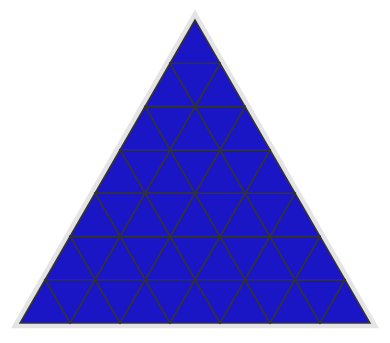
Six equilateral triangles meet at every vertex. The densest of the regular tilings; the only one whose vertex angle (60°) divides 360° six times.
4.4.4.4 — Square
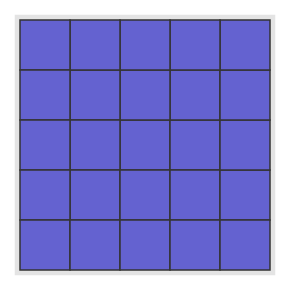
The graph paper. Four squares per vertex. Boring on its own; fertile ground for everything that comes later.
6.6.6 — Hexagonal
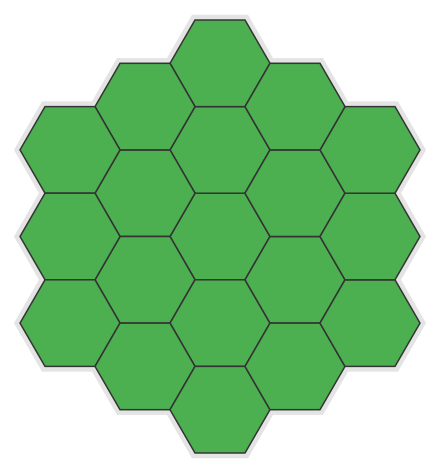
Three hexagons per vertex, at 120° each. The dual of the triangular tiling, and (not coincidentally) what bees converged on.
Mixing two polygon shapes
3.6.3.6 — Trihexagonal
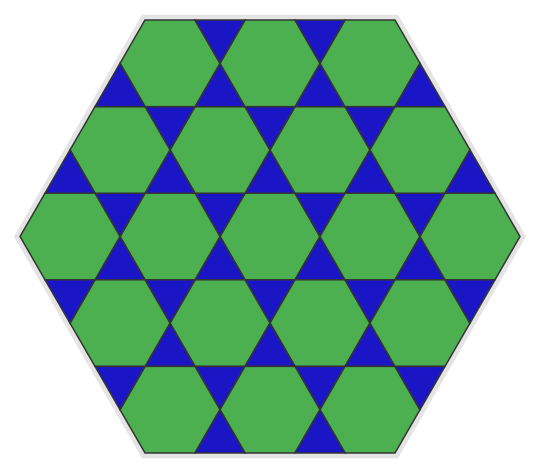
The most photogenic of the lot. Hexagons share vertices with each other; triangles fill the kite-shaped gaps in between.
3.12.12 — Truncated hexagonal
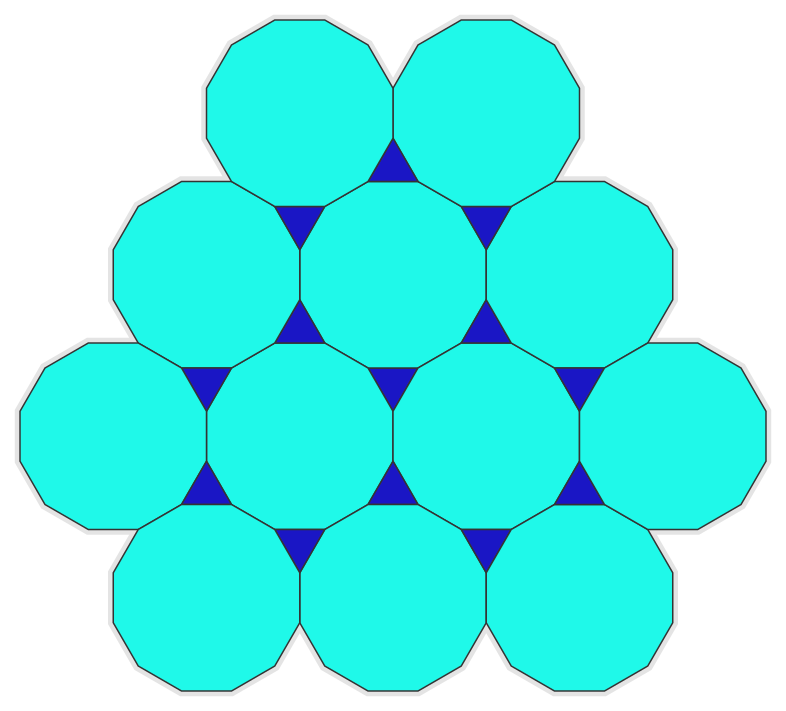
Take 6.6.6, slice each hexagon’s corners off, and you have
3.12.12. The big polygons have twelve sides apiece.
4.8.8 — Truncated square
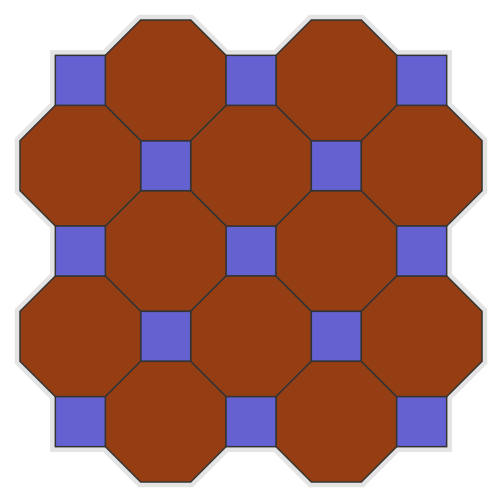
The same trick on 4.4.4.4. Octagons meet two-on-two-off, with
the gaps filled by small squares.
Mixing three polygon shapes
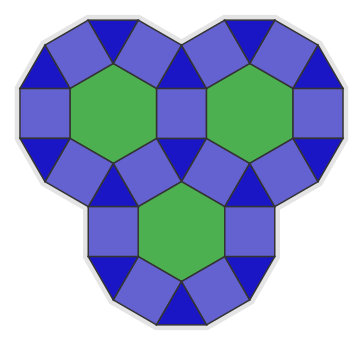
3.4.6.4 — Rhombi-trihexagonal
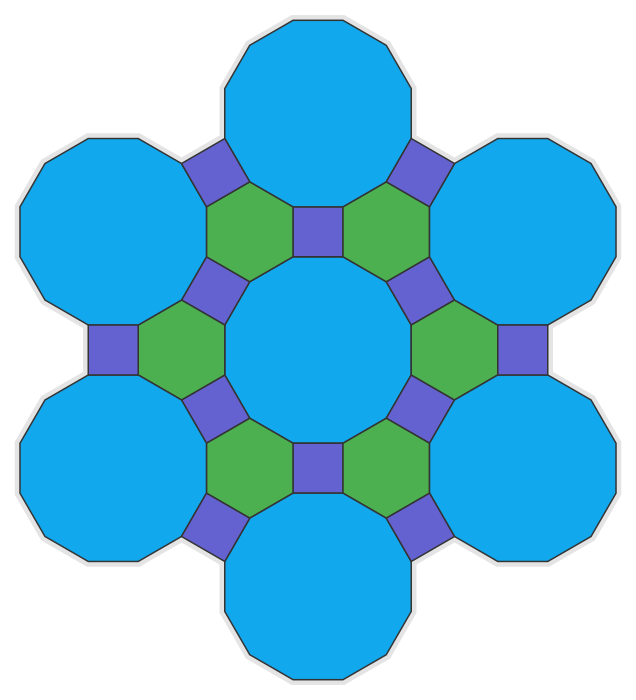
4.6.12 — Truncated trihexagonal
3.3.3.3.6 — Snub trihexagonal
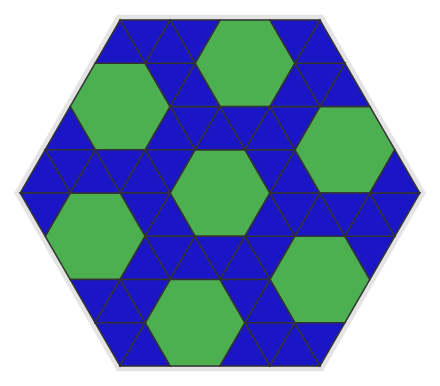
This one is chiral: the tiling is not its own mirror image. There are two distinct snub trihexagonal tilings, one left-handed and one right-handed. Most counts treat them as the same.
3.3.3.4.4 — Elongated triangular
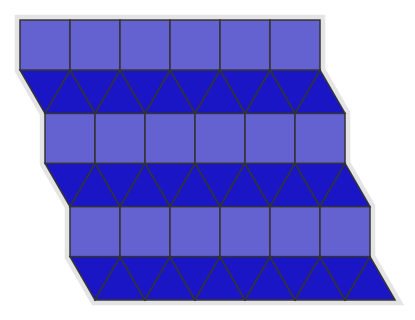
3.3.4.3.4 — Snub square
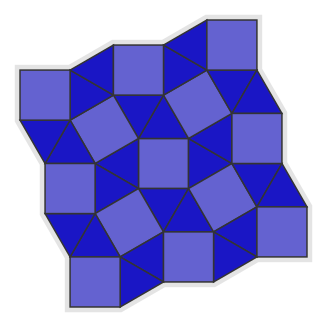
The last two both use only triangles and squares; what differs is the order in which those polygons meet around each vertex.
Open the editor
Every one of these is buildable in the editor in a handful of
clicks. Try editor.tessell.art;
pick one and see how far you get before the geometry tells you
there is only one way it could possibly continue.